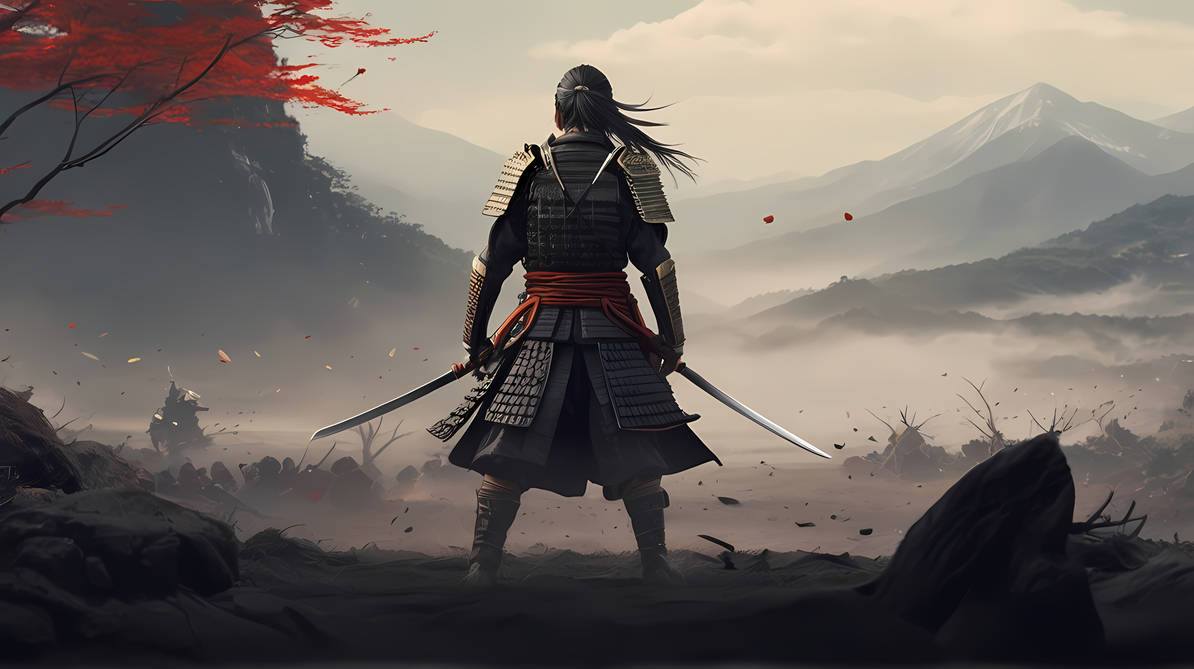
In the autumn of 1877, atop a hill in Kagoshima, five hundred samurai faced the end of an era. Opposing them was the newly forged Imperial Japanese Army of 30,000 soldiers equipped with modern rifles and heavy artillery. This was more than a lopsided skirmish, it was the definitive collision between traditional values and the relentless, mechanized momentum of progress.
It’s the nature of time that the old ways must give in
It’s the nature of time that the new ways comes in sin
When the new meets the old it always ends the ancient ways
And as history told the old ways go out in a blaze
— Sabaton, The Last Stand
The Soul of the Sword
To the samurai, the katana was never merely a weapon. It was an extension of the soul. It represented a lifetime of discipline, a rigid code of honor, and an uncompromising identity. The sword was a sacred object, embodying the spirit of the warrior and the values of a culture that prioritized the “how” of the struggle over the “what” of the result. often considered a sacred object that embodies their spirit.
The Utility of the Rifle
Conversely, to the imperial soldier, the rifle was a triumph of industrial efficiency. It was an equalizer that prioritized lethality and distance over individual mastery. As a symbol of modernization, the rifle represented a shift in warfare, away from the spirit of the combatant and toward the sheer power of the machine.
Why Choose Death Over Surrender?
To give up on the sword is to give up on the very essence of what it means to be a samurai. It is a surrender of their identity and values, and a recognition that their way of life is no longer viable in the face of modern technology and warfare. If they surrendered, their ideals and way of life would have died before them. As they were decimated, their way of life did die after them. As they managed to close the distance to the imperial army, their way of life, their honor and their values were relevant for one last time.
For the samurai, laying down the sword was not a tactical retreat, it was an existential erasure. To surrender their weapons was to admit that their values, their craft, and their very way of life were obsolete. By choosing to fight, they ensured that their ideals remained relevant for one final, defiant moment. They didn’t just die, they went out in a blaze, ensuring their legacy was defined by their conviction rather than their displacement.
The Perpetual Clash of Eras
The story of Shiroyama is a universal metaphor for the friction between tradition and innovation. The “new ways” are often viewed as sinful because they disrupt established orders and strip away the human spirit in favor of cold efficiency. While progress makes the impossible accessible, it frequently demands the sacrifice of identity and meaning. History shows us that when the old meets the new, the old ways rarely fade quietly, they are consumed in the friction of the transition.
The Modern Samurai
Today’s samurai are the creators, the artists and writers who value the human soul of their craft. They recognize that while technology can optimize production, it cannot replicate the emotional depth born of human experience. These creators now find themselves in a defensive crouch, refusing to surrender the human touch to a tide of generative algorithms. To them, the automation of art feels like a violation of the sacred bond between the creator and the canvas.
Artificial Intelligence represents the “new way.” It is a tool of staggering power and efficiency, yet it remains fundamentally algorithmic and detached. While it can mimic the aesthetics of art, it lacks the lived experience that gives art its weight and fails in the most non-natural ways possible. For the modern artist, AI is the “imperial rifle”, a cold, mechanical process threatening to replace the individual’s spirit with mass-produced output.
The Pre-existing Degradation of Art
However, we must be honest. Art was under siege long before the first prompt was ever typed. Our culture was already saturated with soulless, formulaic, and mass-produced content. AI is not the root cause of the death of art, but rather the ultimate tool for accelerating its industrialization. It is merely finishing the work that corporate demand and low-quality mass production started decades ago.
Survival in the Age of Algorithms
How do the “old ways” survive this time? I believe the artists who refuse to surrender will evolve into a new class of highly sought-after artisanal creators. In a world drowning in synthetic content, the “Handmade by Human” label will become the ultimate mark of authenticity and luxury.
Furthermore, those who adopt AI responsibly, using it as a sophisticated brush rather than a replacement for the brain—will find a way to thrive. The key is intent. Art must remain meaningful, it must carry a message. The tool is less relevant. When used wisely, technology does not have to be the enemy of the soul.
Artists have their reasons to be angry at the rise of AI, have their reasons to see it as a sin to their craft, as the nature of the new tool tries to disrupt their existing order, with disregard to the values and ideals that they hold dear.
Does a ‘prompt’ make the artist an Imperial soldier? The answer lies in intent. If the AI is a tool used to sharpen a human vision, the spirit of the Samurai remains. But if the soul is surrendered for the sake of sheer output, the battle is already lost. In truth, many joined the Imperial Army long ago, trading craft for efficiency long before they ever typed their first prompt.